PLATO I
2026
Format 1: 132 x 202 cm / 52 x 79.5 in, edition of 6 + 2 AP
Format 2: 67 x 102 cm / 26.3 x 40.2 in, edition of 6 + 2 AP
Hybrid photography, archival pigment print, aludibond, diasec, custom-made aluminium frame
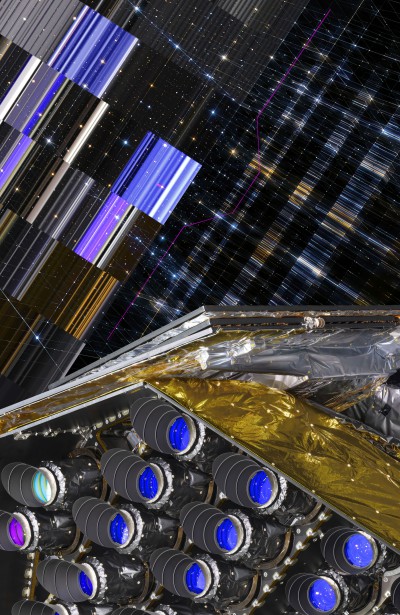
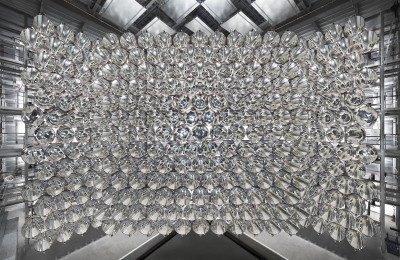
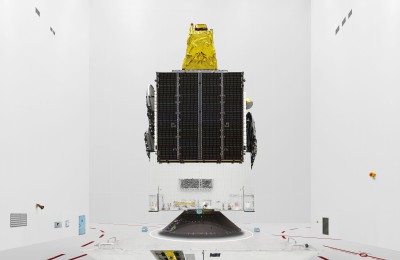
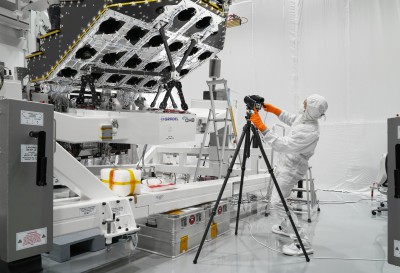
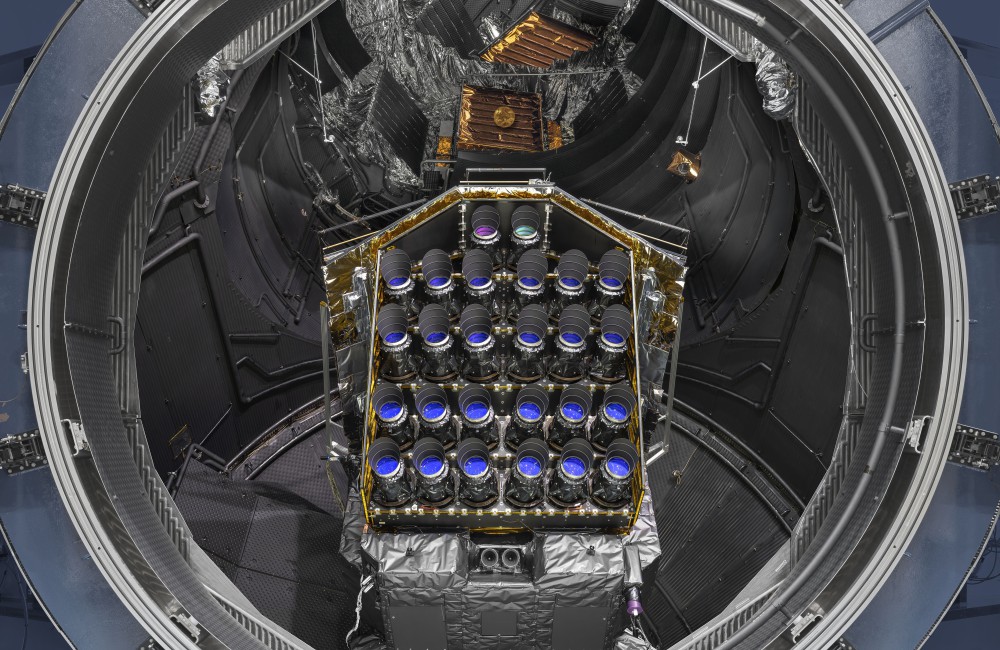
The PLATO mission is part of the European Space Agency ESA’s Cosmic Vision programme. The space telescope was developed and built by OHB Bremen to detect and characterise Earth-like exoplanets – particularly those orbiting Sun-like stars within or near their habitable zones. Over the course of the mission, more than 200,000 stars are expected to be studied. At its core are fundamental questions: How do planetary systems form and evolve? Under what conditions can potentially habitable worlds emerge? And is Earth unique – or are there comparable planets elsewhere in our galaxy? PLATO has an exceptionally large field of view. An array of 26 highly sensitive cameras observes vast fields of stars, detecting even the slightest variations in their brightness. When a planet passes in front of its host star, it briefly dims the star’s light. Through this so-called transit method, a planet can be detected without ever being directly visible. Rather than being imaged itself, the celestial body is revealed indirectly through the minute, temporary decrease in starlight. What matters, therefore, is not “seeing” in the classical sense, but an algorithmic perception of deviations – the detection of planets through minute disruptions in the regularity of light.
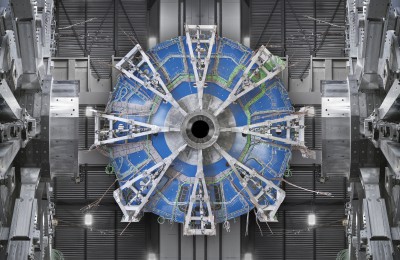
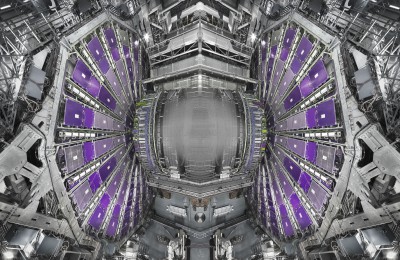
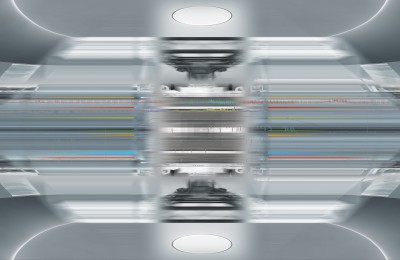
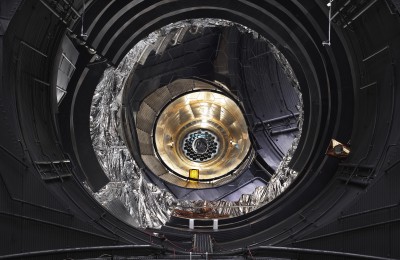
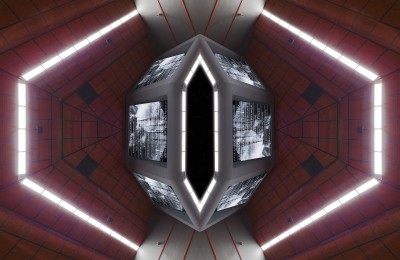
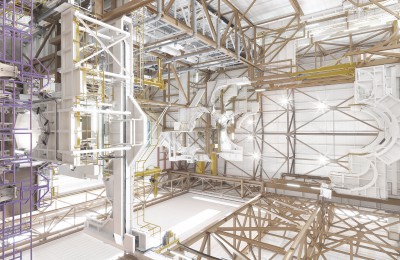
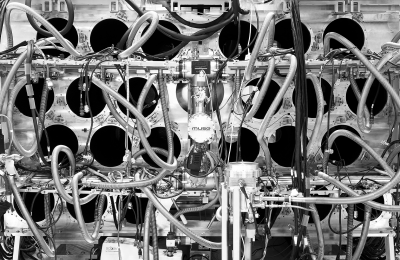
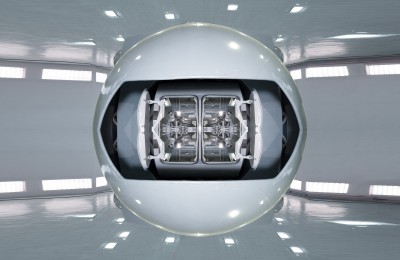
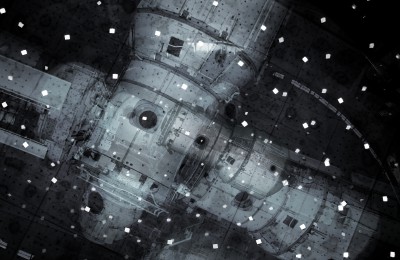
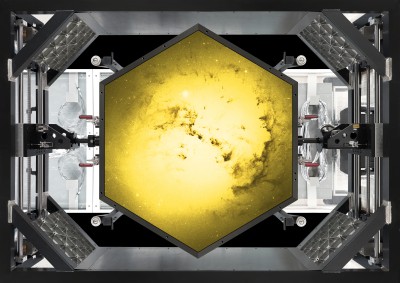
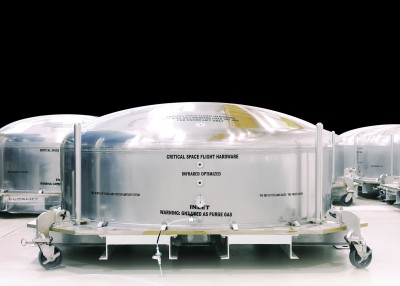
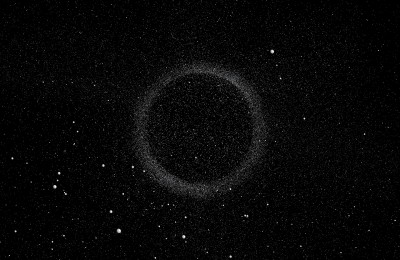
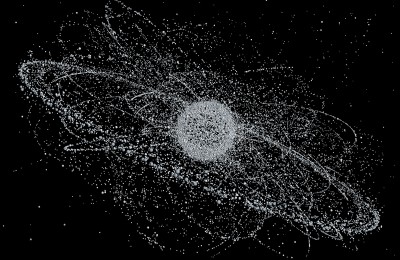
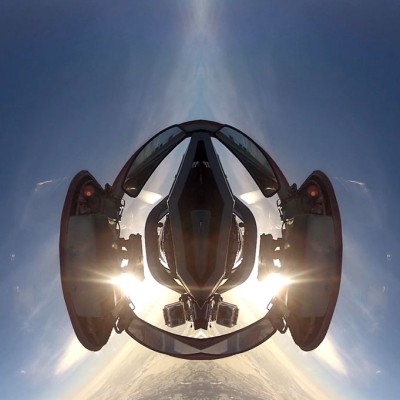
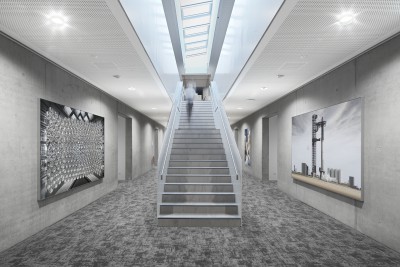
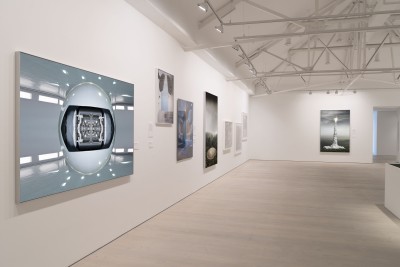
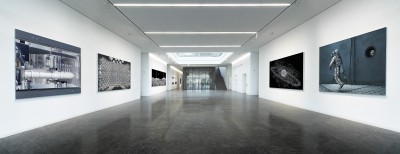
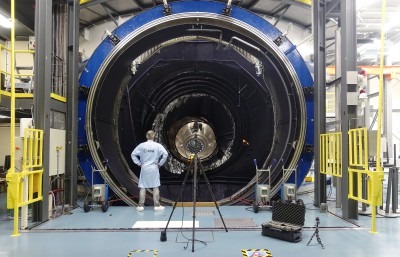
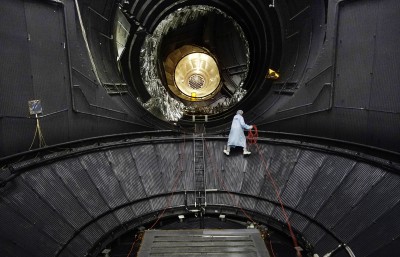
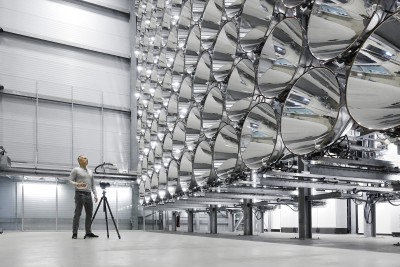
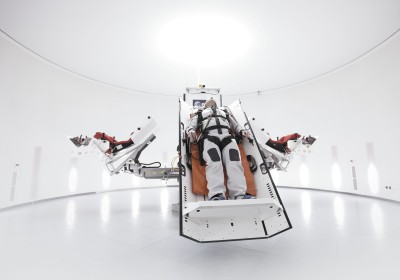
The work “PLATO I” shows the space telescope during a testing phase in the Large Space Simulator at ESA’s test centre in the Netherlands. The strictly frontal and almost symmetrical composition places the futuristic instrument at the centre of a monumental circular architecture. The opening of the simulation chamber surrounds PLATO like an enormous eye, while simultaneously drawing the viewer’s gaze deep into the technological space. As a result, the instrument takes on an almost iconic presence, reminiscent of a technological altarpiece. The viewer is looking at an instrument that was itself created to see. Its multitude of optical elements seems almost to return the viewer’s gaze. The composition takes up this tension: circle and grid, light and darkness, real and reflected spaces overlap to form a visual order in which the boundary between technological instrument and abstract pictorial space becomes increasingly permeable. In this way, “PLATO I” becomes a metaphor for a form of vision that extends beyond what is immediately visible: the worlds it seeks remain invisible themselves, revealing their existence only through the traces they leave in light.
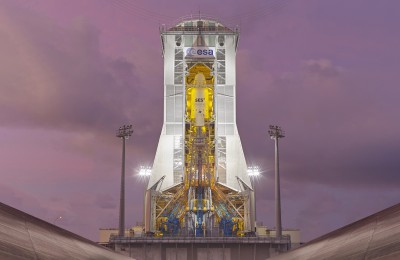
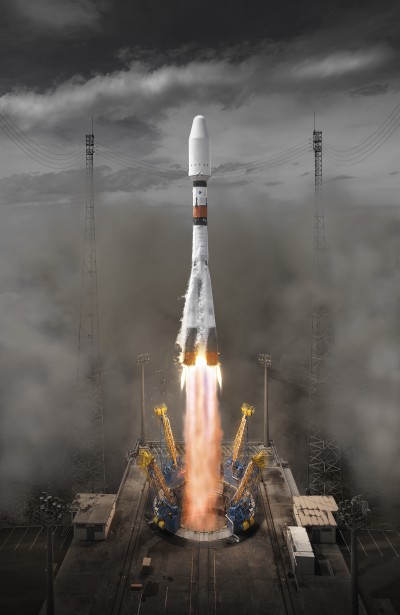
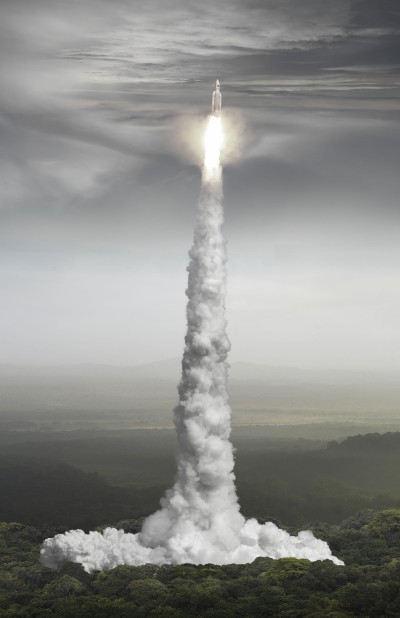
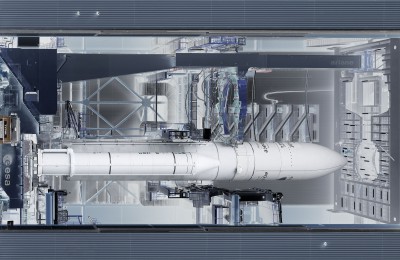
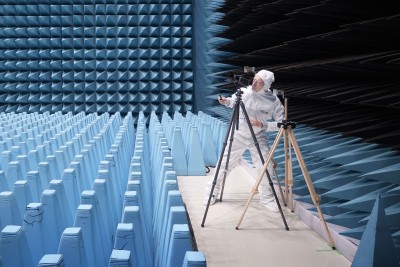
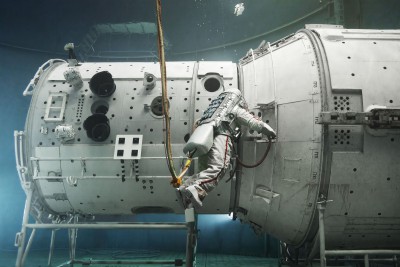
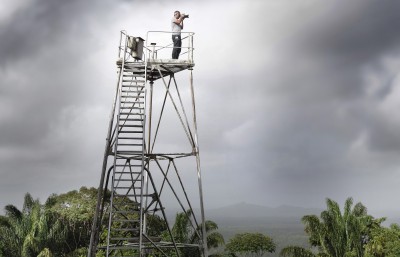
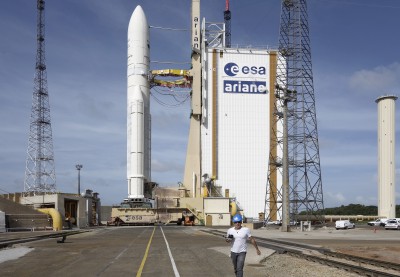
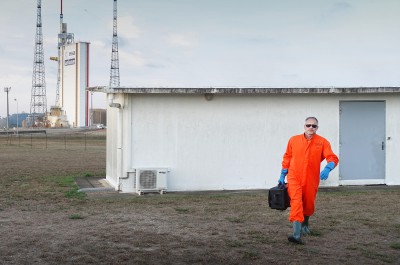
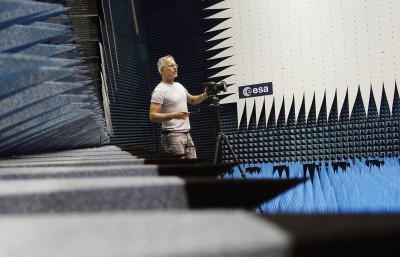
The artist has accompanied the PLATO mission since the beginning of its construction and is documenting its development through to its planned launch aboard an Ariane 6 rocket from French Guiana.